
We answer 24/7
After a house fire in San Tan Valley: smoke, soot and the rebuild
Fire damage is really two jobs: the room that burned, and every room the smoke reached. We clear the debris, clean or remove what’s holding soot and odor, then rebuild what had to come out.
Request Service
Tell us what happened and we'll call you back. In a hurry? Call (623) 288-5596.
- We answer 24/7
Fire & Smoke Damage
What a fire leaves behind
After the trucks pull away, everyone looks at the room that burned. That part is obvious. The harder part is often everywhere else: a gray film on a ceiling two rooms over, black streaks above the supply vents, a smell that lives in the closets.
Smoke goes where air goes. Heat pushes it up into the attic, a running air handler pulls it through the return, and soot settles on whatever it reaches. A stovetop fire can leave the far bedrooms needing work.
Then there’s the water. Putting a fire out soaks drywall, insulation and flooring, and a closed-up house with no power or air conditioning doesn’t dry on its own. So most fire jobs include a water job too, and both have to be handled before anything is rebuilt.
The work
How fire and smoke damage cleanup goes
- Walk the whole houseWe go room by room, not just through the burned area, noting where soot landed, what smells and what the hoses soaked. That walkthrough and its photos become the record you and your insurance adjuster work from.
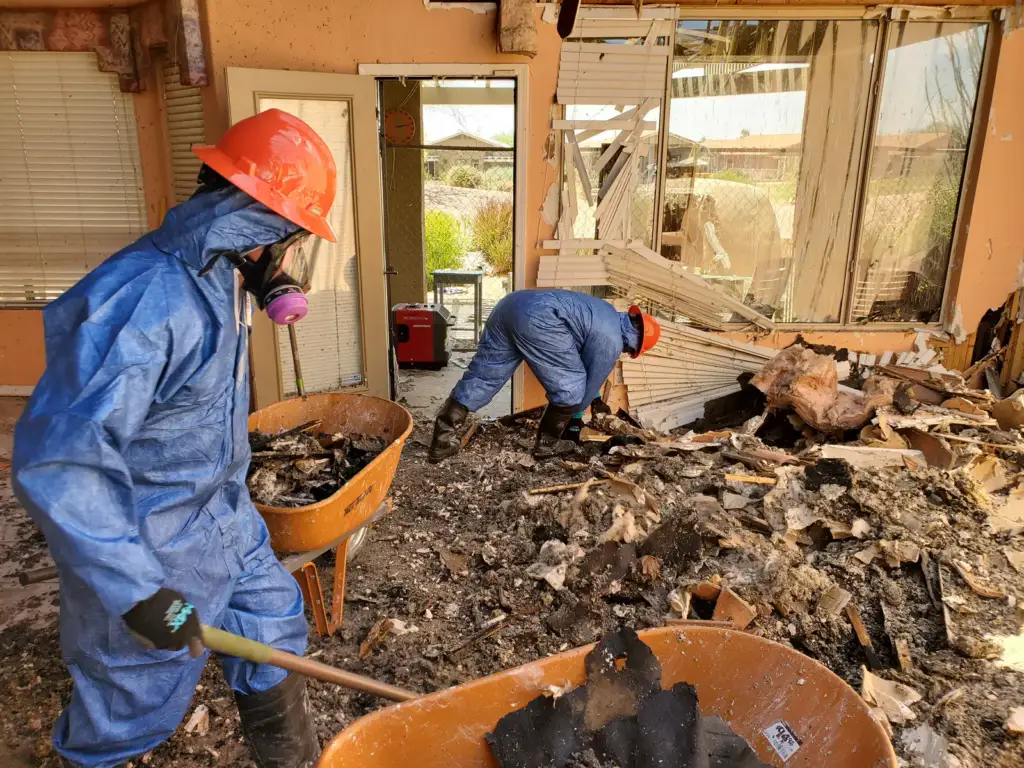
- Clear the debrisBurned contents, charred drywall, ruined insulation and anything else past saving comes out. Our crews wear protective suits and respirators for this part, because fire debris is filthy and the dust isn't something anyone should breathe.
- Dry what got wetWater from firefighting is extracted, and the structure is dried with air movers and dehumidifiers, the same as any water loss. Wet insulation and drywall that won't dry come out, so they don't turn into a mold problem later.
- Clean soot and remove odorWalls, ceilings, cabinets and other surfaces the heat didn't damage get cleaned of soot, slowly, because soot smears. Where odor is held inside insulation or drywall, those materials come out, since covering a smell with fragrance doesn't remove its source.
- RebuildWith the debris out and the structure dry, the house goes back together: framing where it burned, then drywall, texture, paint, cabinets and flooring. The same company that cleared the debris does the construction.
Cost
What changes the cost of fire damage cleanup
Fire jobs get priced after the walkthrough, because the range is wide. A pan fire that blackened one kitchen wall and a garage fire that brought the ceiling down are not the same project, even if both started in a few seconds.
Your policy spells out your deductible, how contents are handled, and whether it helps pay for somewhere to stay during the work. Your adjuster decides what’s covered. We give them a clear record of what burned, what smoke reached and what had to be removed.
- How far the smoke traveledA fire held to one room can still put soot through the whole house. Each room that needs cleaning, and any attic insulation holding odor, adds to the job.
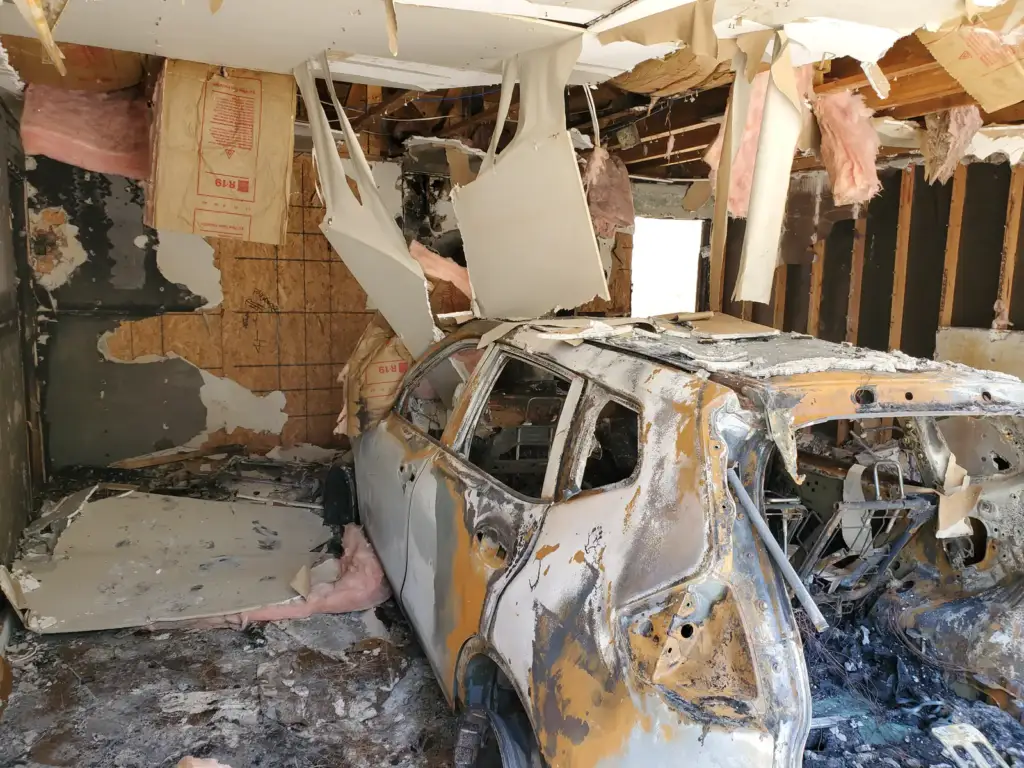
- Structural damageCharred framing, a burned roof deck or a ceiling that fell means structural repair, which will likely need a permit, on top of the cleaning and paint.
- Water from putting it outDrywall, insulation and flooring soaked during firefighting have to be dried or removed too, which can add rooms the flames never touched.
- Openings in the roof or ceilingWhen a fire burned through the roof or dropped the ceiling, that area has to be made safe before anyone works underneath it, which adds time before cleanup can begin.
San Tan Valley
Fire service and fire recovery in San Tan Valley
Fire and emergency medical calls in San Tan Valley go to Rural Metro Fire. The Town’s FAQ says the Town contracts with Rural Metro for fire protection, prevention and emergency medical services, and that Rural Metro is funded through a subscription service. Enrollment details are on the Town’s Emergency Services page, and it’s worth checking your household’s status before you ever need it.
The same FAQ notes that EPCOR owns the hydrants and that the colors on top tell firefighters which size fitting to use. Keep the one nearest your house clear of shrubs, plants and anything else, as the Town asks.
Once the fire department says the house is safe to enter, the recovery side starts: soot, odor, drying and then construction. Structural rebuilding inside town limits now runs through the Town’s own permit process, which our repairs page walks through.
Why Tri Point
What you get from one contractor
- Licensed for the rebuildTri Point is a licensed Arizona contractor (ROC 335008) holding a KB-1 dual building license. Most fire jobs end in construction, and that license lets the company clearing the debris also frame, drywall and finish the house.
- The owner stays involvedAdam Kriloff oversees every project. A fire forces a lot of decisions in a short stretch, about what to keep, what to throw out and what the adjuster needs to see, and it helps to make them with the person responsible for the work.
- What our reviews do showNone of Tri Point's Google reviews is about a fire. What Keith LaCombe's does describe is how the crew handles demo, communication and finish work before leaving, which is most of what a fire rebuild comes down to.
“…Great follow up and communication from the company and the contractor Nelson who performed the labor and demo was a pleasure to deal with. Nelson went above and beyond making sure all his work was correct and up to my satisfaction before leaving when the job was complete.…”
When can we go back inside after a fire?
Only once the fire department tells you it’s safe to enter. Even then, keep the visit short, wear sturdy shoes, and watch for weak floors and hanging ceiling material. Before you move or wipe anything, take photos of every room, because your insurance company will want to see the damage as it was.
Why does the house still smell like smoke after we cleaned?
Because the odor is in materials you can’t wipe. Smoke works into insulation, the paper face of drywall, carpet pad and the unfinished backs of cabinets. Cleaning surfaces helps, but when the smell is coming from inside those materials, they have to be treated at the source or taken out and replaced.
A car burned in our garage. Can the garage be repaired?
Often it can, depending on how much of the framing and ceiling burned. One of the first things to check is the wall between the garage and the house, since that’s where heat and smoke try to get in. Then charred drywall and insulation come out, burned framing is replaced, and the garage is closed back in and painted.
What should I tell my insurance company after a fire?
Report it as soon as you safely can, and ask what your policy covers for the house, your belongings and a place to stay. Write down the claim number and the adjuster’s name. If you’d like, we’ll walk the house with your adjuster and share photos and notes on everything that burned, got sooty or got soaked.
Does an older house change how fire cleanup works?
It can, if the tear-out touches materials that might contain asbestos. Adam’s advice for older homes is to test before you cut, sand or tear out materials, since asbestos can hide in popcorn ceilings, older floor tiles, drywall joint compound and pipe insulation. We sample what the work will disturb and handle removal or encapsulation if it turns up.
Talk to our team
Fire's out. Not sure what comes next?
Call (623) 288-5596, day or night. We’ll ask what burned, where the smoke went and whether the hoses soaked anything, then set up a walkthrough with you.