
We answer 24/7
Emergency water removal and flood cleanup across San Tan Valley
Storm runoff under a door, a washer line that ran all afternoon, a water heater that split in the garage. We pull the water out, sort clean from dirty and dry the house until it reads dry.
Request Service
Tell us what happened and we'll call you back. In a hurry? Call (623) 288-5596.
- We answer 24/7
Flood & Monsoon Water
Inside water, outside water
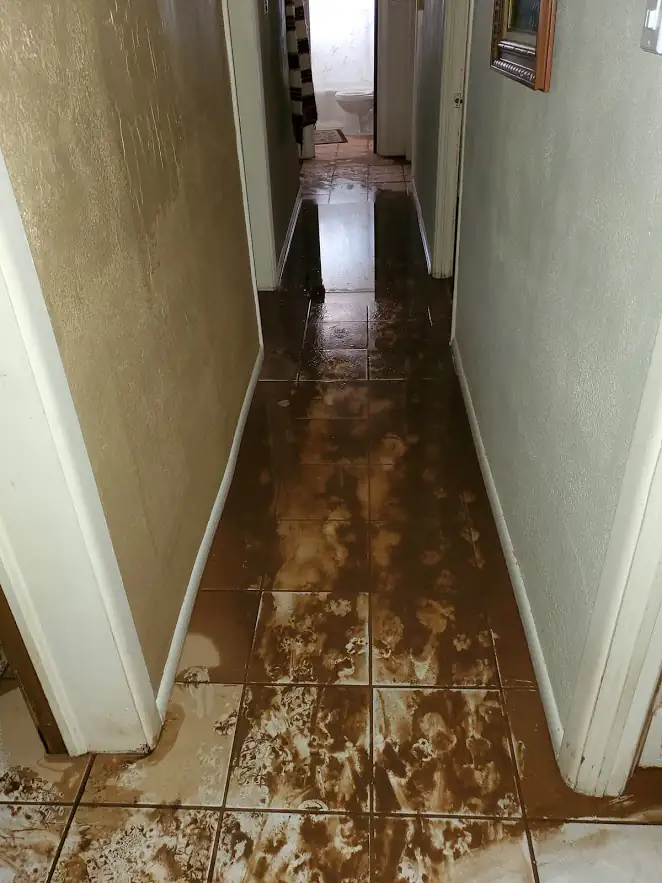
Some floods start inside. A supply line, water heater or water conditioner lets go, and clean water spreads across tile and under baseboards until someone finds the shutoff. Others come from outside, when a monsoon cell dumps heavy rain in a short burst, the street and yard can’t carry it, and muddy water finds the lowest door.
Where it came from changes the work. Clean water caught early can often be dried in place. Runoff carries soil and whatever was lying on the ground, so the carpet, pad and lower drywall it soaked usually come out. It changes the insurance conversation too, which is covered further down.
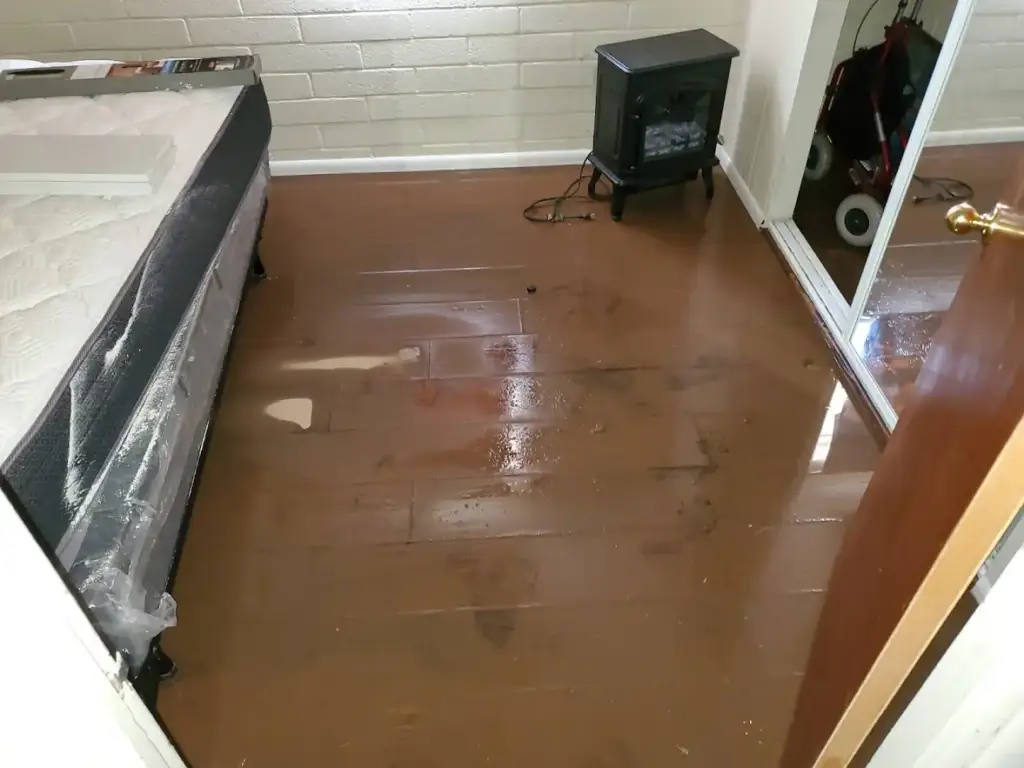
Either way, water keeps moving after it stops being visible. It wicks up drywall, slides under the bottom plate of interior walls and sits beneath vinyl plank. Water mitigation is the work of stopping that spread and drying what’s wet before it becomes a bigger repair.
The work
What emergency water removal involves
- Stop the waterIf it's still coming in, that comes first. Inside leaks usually mean closing a valve or capping a line. With outside runoff, the water has to stop rising before drying can start, since there's no sense drying a room that's still taking water.
- Extract itStanding water is pulled off tile, out of carpet and from under furniture with extraction equipment. Every gallon removed as liquid is a gallon that doesn't have to be dried out of the walls and slab later.
- Sort what stays from what goesThe source decides this. Clean supply-line water may let carpet and drywall be dried and kept. Muddy runoff or a sewer backup usually means pad, carpet and the bottom of the drywall come out, and hard floors get cleaned before drying.
- Dry the structureAir movers and dehumidifiers go in, set for the rooms and materials involved. Drywall, baseboard, cabinets and concrete dry at different speeds, so the equipment gets moved and adjusted as the job goes.
- Measure until it's dryMoisture readings are taken on each visit until the materials are back to dry. Those readings and photos go into the record your adjuster will want, and anything that has to be rebuilt moves to the repair stage.
Cost
Why one flood job costs more than another
The two big questions are how far the water spread and how dirty it was. One wet bathroom caught right away is a short job. Runoff through several rooms that sat overnight means extraction, tear-out, cleaning and days of drying equipment.
For insurance, the source matters. A burst line inside the house and water that rose from outside are usually handled under different coverage, so tell your insurer exactly how the water got in. We document both the same way: photos, readings and a list of what came out.
- Clean or dirty waterWater from a supply line can often be dried. Runoff, sewage, or clean water that sat long enough to turn means more removal and more cleaning first.
- How long it satWater found right away is mostly on the surface. Water that ran all night has wicked into drywall, soaked under baseboards and worked its way into the slab.
- How many roomsEach room the water reached needs extraction, equipment and readings. Water that crossed a hallway or ran under a shared wall adds rooms quickly.
- What's on the floorTile on slab often survives. Carpet pad rarely does, and vinyl plank or laminate can trap water underneath, which usually means pulling it up to dry the slab.
San Tan Valley
Flooding in San Tan Valley: the record and the maps
Heavy rain has closed roads in San Tan Valley before. National Weather Service storm reports show Hunt Highway shut from Ellsworth to Mountain Vista for high water on March 1, 2014, and low water crossings flooded in very heavy rain on July 23, 2017. Water reported as knee-deep covered Skyline Drive near Felix Road on July 25, 2021, and on September 26, 2025 roughly 2 feet of rushing water left cars stuck on North Gary Road.
Since incorporating, the Town has its own listing with FEMA as a flood insurance community, number 040002, with a current map effective November 28, 2025, and FEMA’s flood hazard layer shows high-risk Zones A and AE reaching into town along Queen Creek.
Flood coverage is its own policy. FloodSmart says most homeowners insurance doesn’t cover flood damage, and that almost one-third of flood insurance claims come from outside high-risk areas. A new policy takes effect 30 days after purchase, so it’s worth sorting out long before a storm is in the forecast.
Why Tri Point
Working with us on a water job
- Overseen by the ownerAdam Kriloff oversees every project. When water is spreading through a house, you talk with the person who decides what gets pulled and what gets dried, and he'll tell you why.
- Drying and rebuilding, one licenseDrying is half of most flood jobs. Our KB-1 dual building license covers the drywall, baseboard, cabinets and flooring that go back in afterward, so the company that opened things up is the one that finishes them.
- Plain answersHonesty and clear explanations come up again and again in our Google reviews. On a flood job that means telling you plainly whether we're looking at clean water or runoff, what has to go and what can be saved.
“After the recent storms I had some bad damage. I called Tri Point and they were very respectful and knew what they are talking about.…”
“Adam and his team of Tri Point professionals were very quickly responsive, thorough, expert and professional in mitigation and repairs from a recent unexpected flood due to a defective water conditioner.…”
Storm water is coming in under the door. What should I do right now?
Keep everyone away from the water and anything electrical it’s near, then slow it down with towels along the gap if you can do that safely. Lift what you can off the floor and take photos while it’s happening. Then call us, and don’t wait for the floor to look dry, because the water underneath won’t be.
Does homeowners insurance cover monsoon flooding?
Usually not when the water rose from outside and came in at ground level. FloodSmart says most homeowners insurance doesn’t cover flood damage, which is why flood policies are sold separately. Rain that came in through a storm-damaged roof can be a different kind of claim, so describe exactly how the water got in when you call your insurer.
How do I check whether my San Tan Valley address is in a flood zone?
Type the address into FEMA’s flood map search. Zones beginning with A are high-risk areas, and FloodSmart notes that a federally backed mortgage on a property in a high-risk zone requires flood insurance. Maps get revised, so if you last looked your lot up years ago, check it again.
How long does drying take after water gets in?
Usually days, not hours, and the moisture readings decide when it’s done, not the calendar. A wet bathroom floor caught early dries faster than a slab and wall cavities that soaked overnight. If drying gets cut short and a wall stays damp, mold can follow, and our mold removal page explains what to watch for.
Will you work with my insurance adjuster?
Yes, we work with your insurance company and adjuster through the whole job. That means sharing photos of the water and the waterline, readings from each visit and a list of everything we removed and why. Coverage is your insurer’s call, and we won’t promise it, but they’ll have a clear record to decide from.
Talk to our team
Water on the floor right now?
Call (623) 288-5596. Tell us whether it came from a pipe or from outside, how many rooms it reached, and whether it’s still coming in.