
We answer 24/7
Mold removal in San Tan Valley, starting with the water behind it
Mold needs water before it needs anything else. We find the leak that fed it, close off the area, take out what’s growing, and rebuild the wall once the framing is dry.
Request Service
Tell us what happened and we'll call you back. In a hurry? Call (623) 288-5596.
- We answer 24/7
Mold Removal
How mold gets started in a desert house
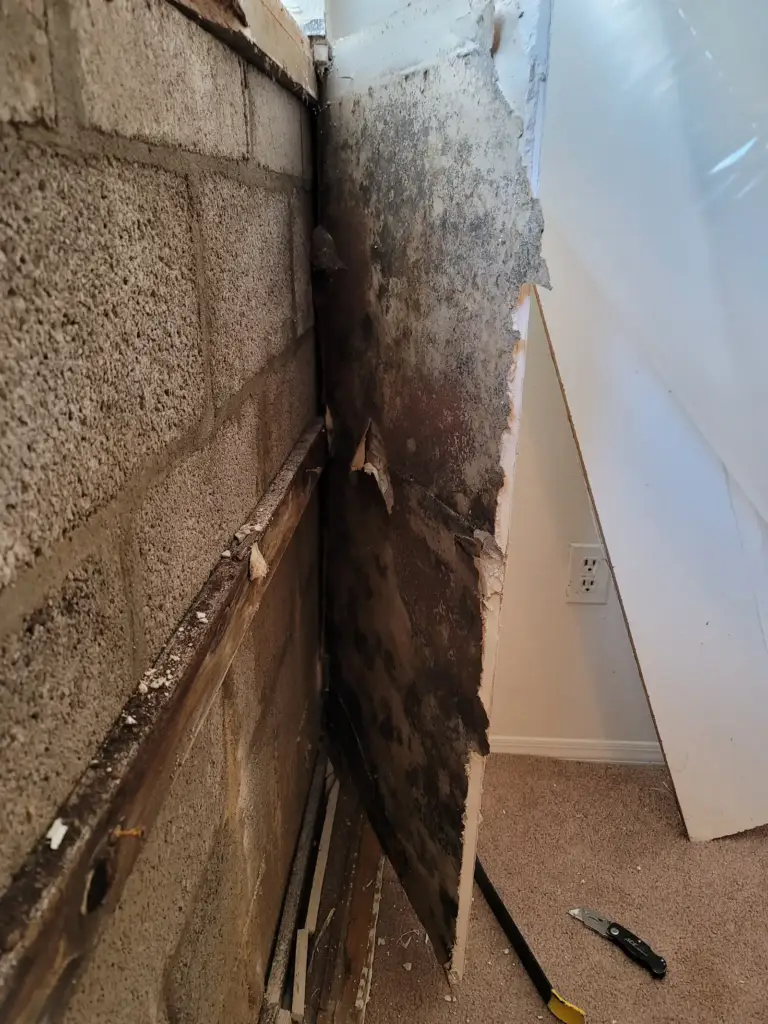
It’s fair to wonder how mold grows somewhere with so little rain. Rain is rarely the cause. A drain line weeping under a vanity, a washer hose that drips a little every load, or a roof that let one hard storm in can keep the inside of a wall damp for weeks without anyone seeing it.
Inside that wall it’s dark, the air doesn’t move, and for much of the year it’s warm. Drywall paper and wood framing give mold plenty to feed on. By the time you notice a musty closet or paint that bubbles, the growth on the back of the board is usually larger than the spot on the front.
Sometimes no one notices at all until a buyer’s inspector opens a cabinet and writes it down. Then the problem arrives with a closing date attached.
The work
What mold remediation involves
- Trace the moistureWe start where the water is, not where the stain is. Moisture readings, the plumbing layout and whatever sits on the other side of the wall show how far the damage runs. If a lab test would answer a real question, we'll tell you which one and why.
- Contain the work areaThe affected room or section is closed off from the rest of the house before anything gets cut. That keeps dust and spores from the tear-out in one place instead of carrying them down the hall.
- Remove what's growingMoldy drywall, insulation, baseboard and carpet pad come out and leave the house. Porous material that has grown mold usually isn't worth trying to save, and the EPA's mold guide says ceiling tiles and carpet may have to be thrown away.
- Clean and dry what staysWith the soft material gone, the studs, subfloor or slab underneath get cleaned and dried. We keep checking until the wood and concrete read dry, because closing a wall over damp framing just starts the problem over.
- Fix the source, then rebuildThe leak is repaired before the wall goes back. Then new drywall goes up, gets textured and painted, and the baseboard, vanity or flooring that came out is replaced, so no second company is needed to finish the room.
Cost
What changes the cost of mold removal
We can’t price mold from a photo of a stain, because the stain rarely shows the size of the job. A patch behind a toilet is small. Growth that followed a slow leak across a wall cavity, into the insulation and under the flooring is something else entirely.
Coverage depends on your policy and on what caused the mold. Some policies treat a sudden break differently from a slow leak, so call your agent before work starts. We photograph the growth and its source and keep your adjuster up to date as the work moves.
- How far it spreadSquare footage matters, but depth matters more. Growth that reached insulation, framing or the backs of cabinets means more comes out and more goes back in.
- What it's growing onDrywall and carpet pad get replaced. Studs and concrete can usually be cleaned and dried in place, which keeps the rebuild smaller.
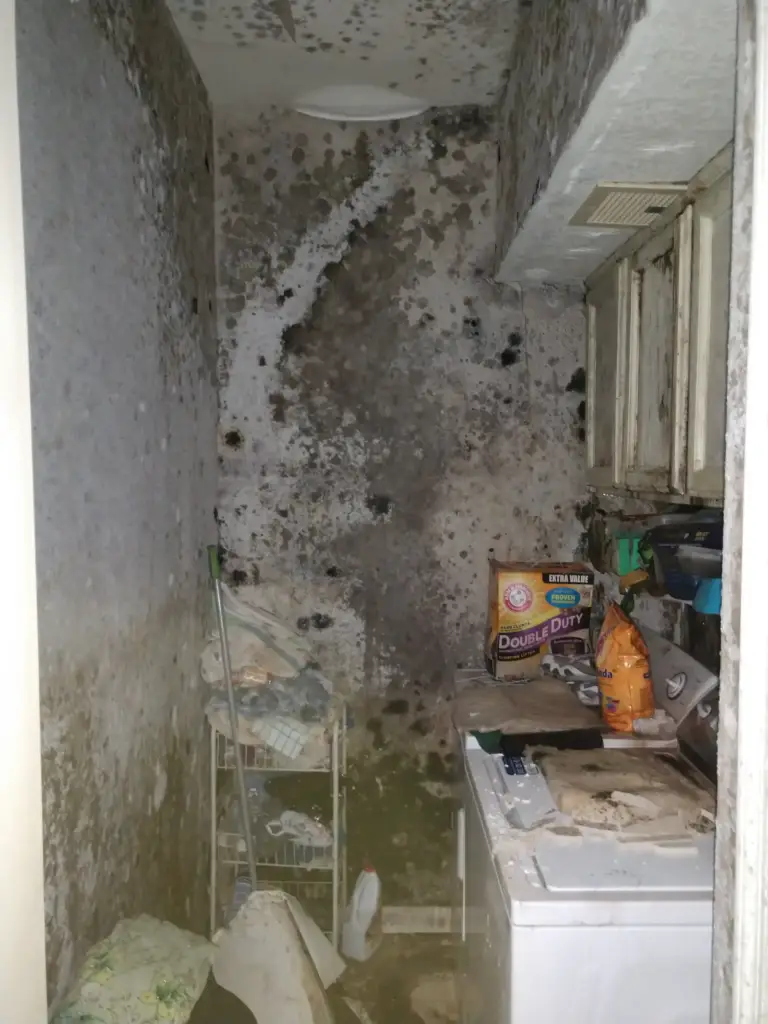
- Getting to itMold behind a tiled shower, under a run of kitchen cabinets or above a finished ceiling takes more tear-out to reach than mold on an open laundry wall.
- Whether samples are neededVisible growth with an obvious source often doesn't need lab work. A smell with no visible source, or a buyer who wants results on paper, might.
- The size of the rebuildOne section of drywall is quick to replace. Matching tile, swapping a vanity or replacing flooring that runs through several rooms adds time and material.
San Tan Valley
Mold and moisture in San Tan Valley homes
Summer in San Tan Valley works against a wet wall. The house stays shut with the air conditioning running, and the cavity behind a leaking supply line sits warm and dark with nothing drying it out. The EPA says to dry water-damaged areas and items in 24 to 48 hours to prevent mold growth. A slow leak inside a wall has usually blown past that window long before anyone knows it’s there. Read the EPA’s brief guide to mold and moisture.
Mold also comes up in home sales, often from an inspection report. The EPA’s page on mold testing says sampling is unnecessary in most cases when mold growth is visible, and that there are no EPA regulations or standards for airborne mold. So for buyers and sellers the useful questions are practical ones: where is the water coming from, how far did the growth go, and when will the repair be done.
Why Tri Point
How we run a mold job
- The owner makes the callsAdam Kriloff owns Tri Point and oversees every project. The person deciding how much drywall comes out is the same person you can call with a question halfway through.
- Removal and rebuild togetherOur KB-1 dual building license, residential and commercial, lets the crew that opens the wall also close it. You won't be left with bare studs and a list of other contractors to call.
- A record people can shareWe write down and photograph what we find, which helps when a buyer, a seller's agent and an insurance adjuster all need to see the same facts. Kyle Barichello's review describes that kind of job during a closing.
“…He visited the day of on a weekend to assess our mold situation. He was responsive and willing to go the extra step to make sure the job was well done. He communicated very well and worked great with all the people in our closing.…”
“…Adam knew what he was doing and checked in regularly to make sure the repairs were going well. Very good communication. Overall a great experience considering the leak behind the wall causing mold.…”
How can I tell if mold is inside the wall and not just on the surface?
Usually you can’t from the surface alone, which is why moisture gets checked first. A spot that wipes off and comes back, paint that bubbles, baseboard that feels soft, or a musty smell strongest near one wall all point to growth in the cavity. Readings, and sometimes a small inspection opening, show how far it goes.
Should I keep running the air conditioning?
Not if the mold is near a vent or return. The EPA advises against running an HVAC system you know or suspect is contaminated with mold. That’s a hard ask in a San Tan Valley summer, so when you call, tell us where the growth is and where your returns are, and we’ll help you work out whether the system can run while you wait.
The buyer's inspector found mold. Does that sink the sale?
It doesn’t have to, but it does put everyone on a clock. Get it looked at quickly so the buyer, the seller and both agents work from the same facts: where the water came from, what has to come out and how long the work will run. We can talk with all of them so the plan doesn’t get retold four different ways.
Does moldy drywall always have to be cut out?
In most cases, yes. Drywall is paper wrapped around gypsum, and growth on the back of the board can’t be scrubbed off from the front. We cut out the affected section, clean and dry the framing behind it, and hang new board only after the readings say the cavity is dry.
Will my insurance cover mold remediation?
Sometimes, and only your insurance company can tell you. It usually turns on your policy’s wording and on what caused the mold, so call your agent before the work starts. Our part is the record: photos of the growth and the leak behind it, notes on what came out, and updates for your adjuster along the way.
Talk to our team
Smell something musty?
Tell us at (623) 288-5596 which room it’s in, what you’re seeing and anything that leaked nearby in the past year. We’ll come out and trace it back to the water.